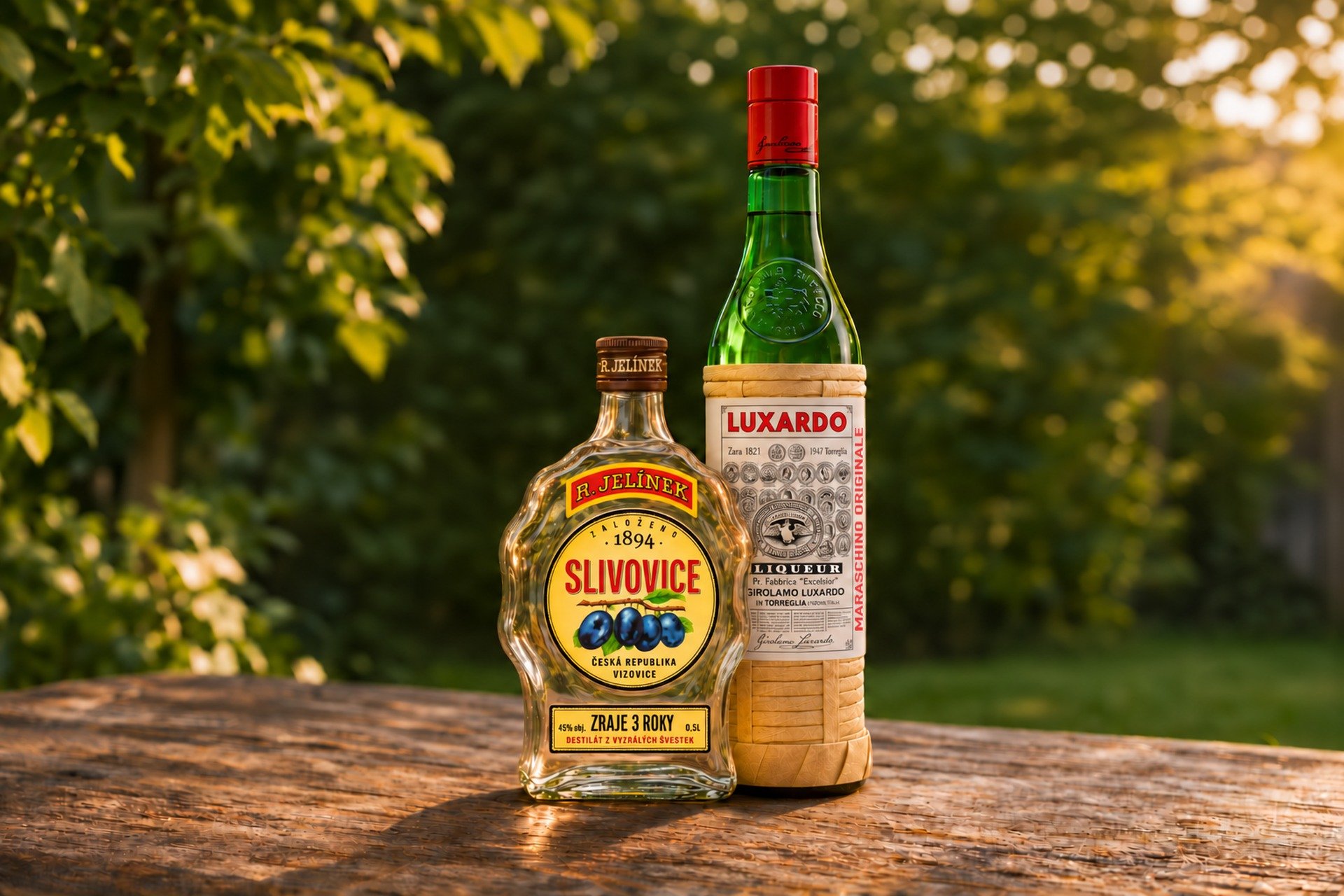
The world’s biggest plum brandy has Rudolf Jelínek’s name on the label, but no Jelínek has owned it for more than 75 years. The best-known maraschino cherry liqueur is still made by the Luxardo family, but on the other side of the Adriatic from where it started.
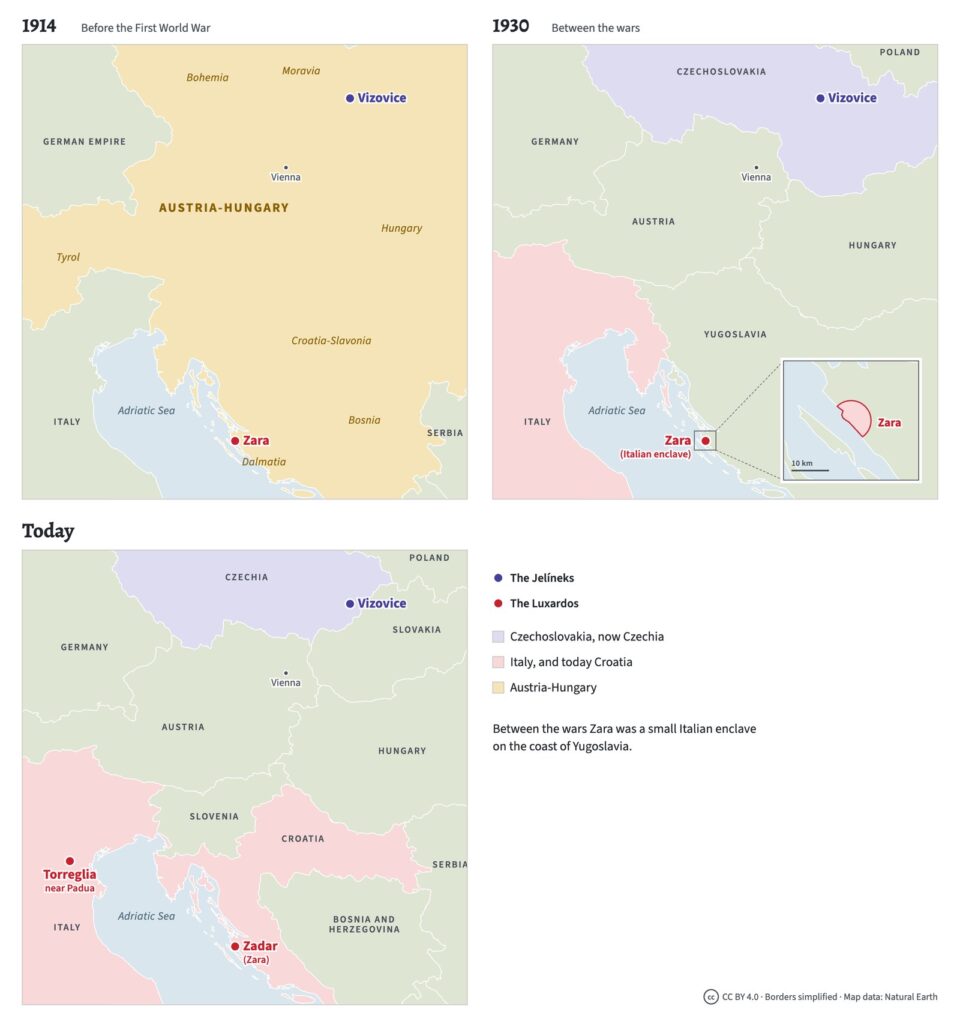
Behind them are two families, the Jelíneks of Czechia and the Luxardos of Italy, with intertwined stories. And like the Barbieri brothers in our Aperol story and the Branca brothers in the Fernet story, both family stories are about brothers, indeed multiple sets of brothers. Both start in the Austro-Hungarian empire, in a small inland town in the plum country of Moravia (present-day Czechia) and Zara, a busy Italian port on the Adriatic 600km to the south (now Zadar, in Croatia).
When you’re sipping a maraschino cocktail like a Last Word or Aviation, or having a warming shot of slivovitz plum brandy, you’re probably not thinking of what it took to create these spirits. It’s a story of world wars, the Holocaust, shifting allegiances, dramatic escapes, injustice, death and tragedy. And plenty of distilling.
From the Valley of Plums to the Zara waterfront
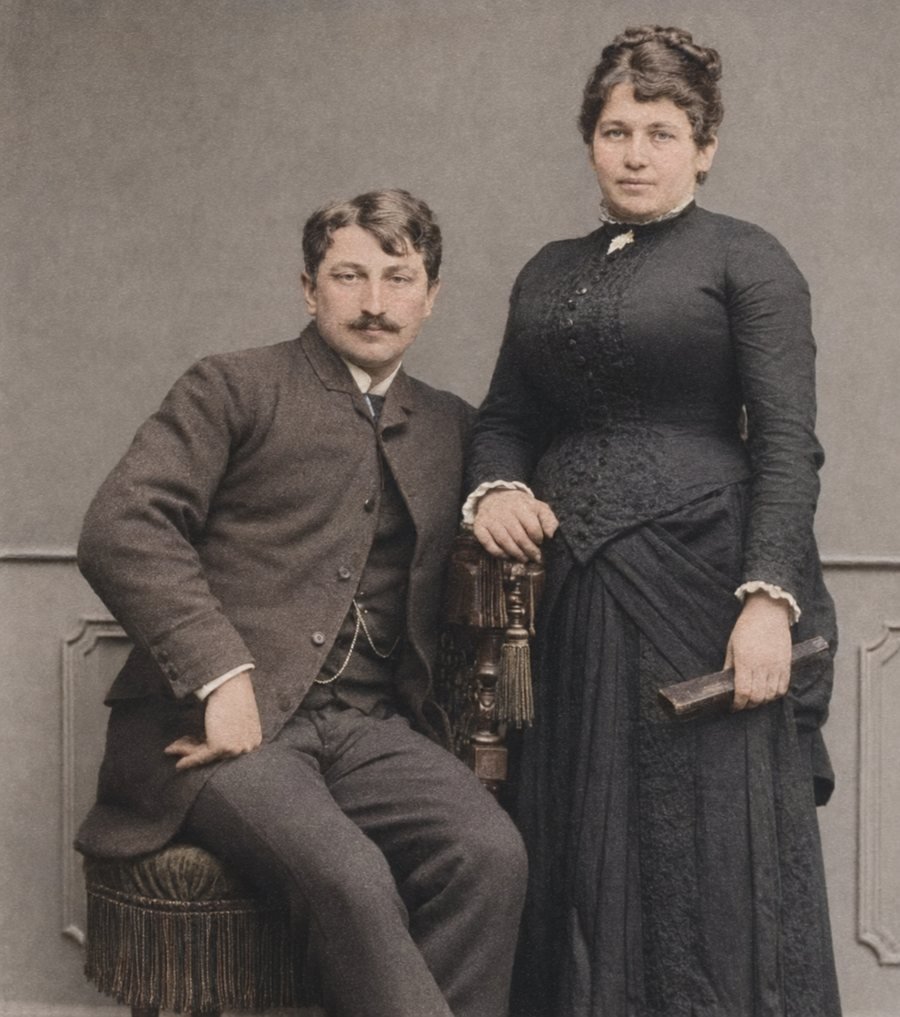
In 1882 a young Jewish man with thick wavy hair and a neat moustache arrived in Vizovice, a small town in the hills of eastern Moravia, to run its oldest distillery. Zikmund Jelínek was just 23, the eldest son in a family of eleven, whose mother had died five years before. His father Jakub had rented the distillery and put him in charge.
Vizovice is in an area nicknamed “the Valley of Plums”, which had 68,000 plum trees in the early 1900s. But the distillery Zikmund took over had spent most of its 300 years making spirits from beer, wine and grain for the inns of the local nobles who owned it, rather than plums. However, the authorities had decided that too much grain was going into rye spirit, a cheap clear spirit a bit like vodka, compared to food production. So they started paying distillers to use fruit instead, and this began the shift towards plum brandy.
Then fate dealt Zikmund a good hand. The local plum growers had done well selling their fruit as dried plums. But after the Austro-Hungarian empire occupied Bosnia, cheaper Bosnian plums poured in, and their market collapsed. The growers were left with plenty of plums and nobody to sell them to, which was good news for anyone who could distil them. Distilling turns plums that would rot in a few weeks into a spirit that keeps for years, a spirit called slivovitz (the Slavic name for distilled plum brandy, a form of rakija). Incidentally, if names like rakija mean little to you, I’d recommend my earlier pieces on the names for spirits and plums and alcohol.
Capitalising on his success, Zikmund left the old distillery and opened his own. He was soon winning prizes at trade exhibitions with his slivovitz and borovička (a juniper spirit). He became a true pillar of the community: he sat on the council, served in the volunteer fire brigade, helped found the town’s savings bank, and was one of the people behind its new synagogue. He and his wife Berta had six children, among them two sons, Rudolf and Vladimír, and a daughter, Karla, whose daughter and grandson we’ll meet later.
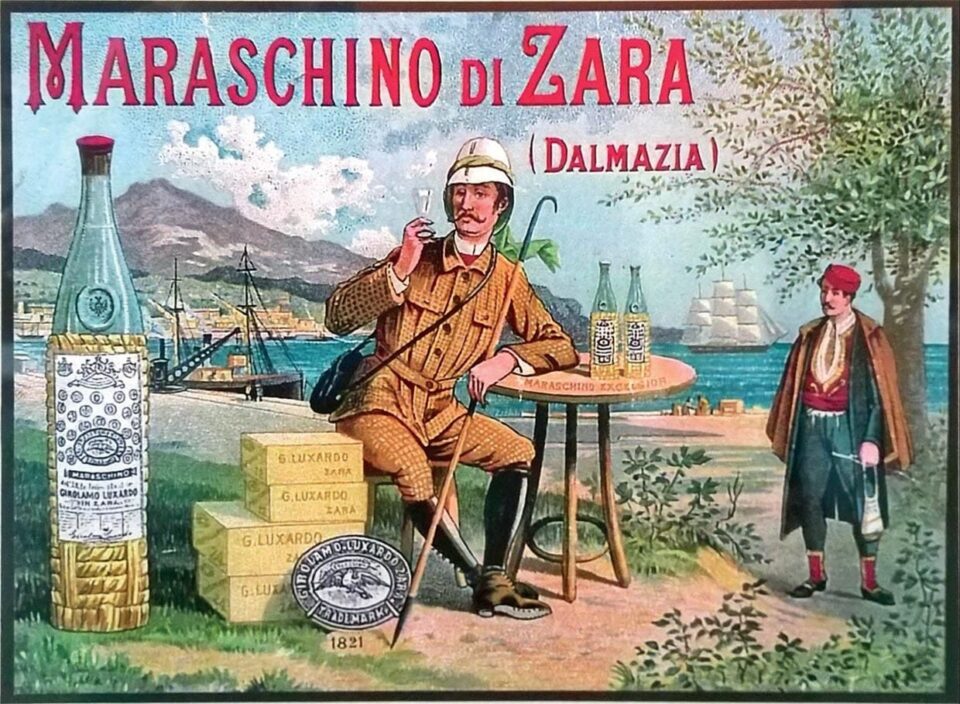
By the time Zikmund arrived in Vizovice, another family had already been distilling down on the Dalmatian coast for 60 years. The cherry’s answer to slivovitz is maraschino, a clear liqueur made from the marasca, a sour, almost black cherry that until the 20th century only grew on the Dalmatian coast. Its name is short for amarasca, from amaro, “bitter”, and like the damson it’s a Prunus, a cousin of the plum. The best known maraschino is Luxardo, in its distinctive straw-wrapped bottle. It was first made in Zara, an Italian-speaking port that was then part of the Austro-Hungarian empire, that is now called Zadar, and is in Croatia.
The Luxardo maraschino started as a recipe made at home. The story begins with a couple who came from the other side of Italy. Girolamo Luxardo was nicknamed il piccolino, “the little one”, being only 1.5m tall. The youngest of 11 children, his height kept him out of Napoleon’s army. He married Maria Canevari, from a noble family in Genoa, and traded rope and coral all round the Adriatic. They settled in Zara, where they ran a shop selling coral, metal and lace.
It was Maria who made the liqueur. Dalmatia was already known for it: a cherry rosolio had been made there since the Middle Ages, often in convents, and a Venetian merchant had been making it on a bigger scale. Maria worked on her own recipe at home: cherries steeped in alcohol, sweetened and scented with rose, and it was soon winning over local connoisseurs. In 1821 her husband Girolamo founded a distillery to make it commercially. He went round collecting orders and sent them home to Maria by carrier pigeon, which is why there’s still a dove on the Luxardo maraschino bottle. They built it into a successful business, and before long their maraschino was being shipped as far as New Orleans.
By 1913 the family had built a big new distillery on the Zara waterfront, led now by Girolamo and Maria’s grandson, Michelangelo. He was a fervent Italian nationalist (in a city ruled from Vienna and surrounded by Croatian countryside), so much so that he ended up heading the local branch of an Italian nationalist society. His sons were all sent to universities in Italy, among them Nicolò, the eldest, Pietro, an engineer who ran distillery production, and Giorgio, the youngest.
Italy had been unified since 1861, but it didn’t have control of the Italian-speaking towns like Zara on the other side of the Adriatic, in Dalmatia, along what’s now the Croatian coast and was then ruled by Austria. Nicolò and Pietro were among those who campaigned openly for Dalmatia to become Italian. When in 1915 Britain and France secretly promised a large part of Dalmatia to Italy, Zara included, Italy agreed to join the war against Austria-Hungary.
Losing a distillery in a card game
When the First World War came, the battle lines were drawn between Germany and Austria-Hungary (the “Central Powers”) on one side and the Allies on the other side (including Serbia, Russia, France, Britain and, later, Italy). The Jelíneks were very much within the Austro-Hungarian empire, and fought for the Central Powers.
As for the Luxardo family, the war split them, and two of the brothers fought on opposite sides. Zara was part of Austria-Hungary, so its young men were called up into the Austro-Hungarian army, even Italians. Giorgio, the youngest, was still in his teens and ended up being called up into the Austro-Hungarian cavalry. He went on to be decorated for bravery on the Russian front. Nicolò, the eldest, was determined to volunteer for Italy. As an Austrian subject he first had to get across to Italy, and in Austria’s eyes that made him a traitor. It was a real risk: volunteers captured by the Austrians could be executed. Only about two thousand men from Austria’s Adriatic lands volunteered for Italy; most Italian speakers were conscripted to fight for Austria. Nicolò made it into the Italian army, and was twice decorated for bravery.
Up in Moravia, both of Zikmund Jelínek’s sons were called up to the Austro-Hungarian army, and both survived and came back, Rudolf as a lieutenant. After the war ended, at the age of 60, Zikmund retired and passed the business to them. They ran the firm together as “Zikmund Jelínek’s Sons”, and soon bought a second distillery at Razov, on the edge of town beside the railway. They also started ageing their slivovitz in oak barrels, copying the way cognac is made. But they were very different characters. Rudolf, the elder, had inherited his father’s head for business but also his quick temper, and was never slow to throw a punch. Vladimír was a calm man who threw himself into public life as well as the business. He was active in the local Zionist society, which campaigned for a Jewish homeland in Palestine, and won a seat on the town council. According to family legend, Rudolf twice lost the family distillery at cards, and managed to win it back, which is why the brothers went their separate ways. Vladimír kept the old firm and its name, and Rudolf kept Razov and gave the new company his own name. This was the start of Rudolf Jelínek slivovitz.
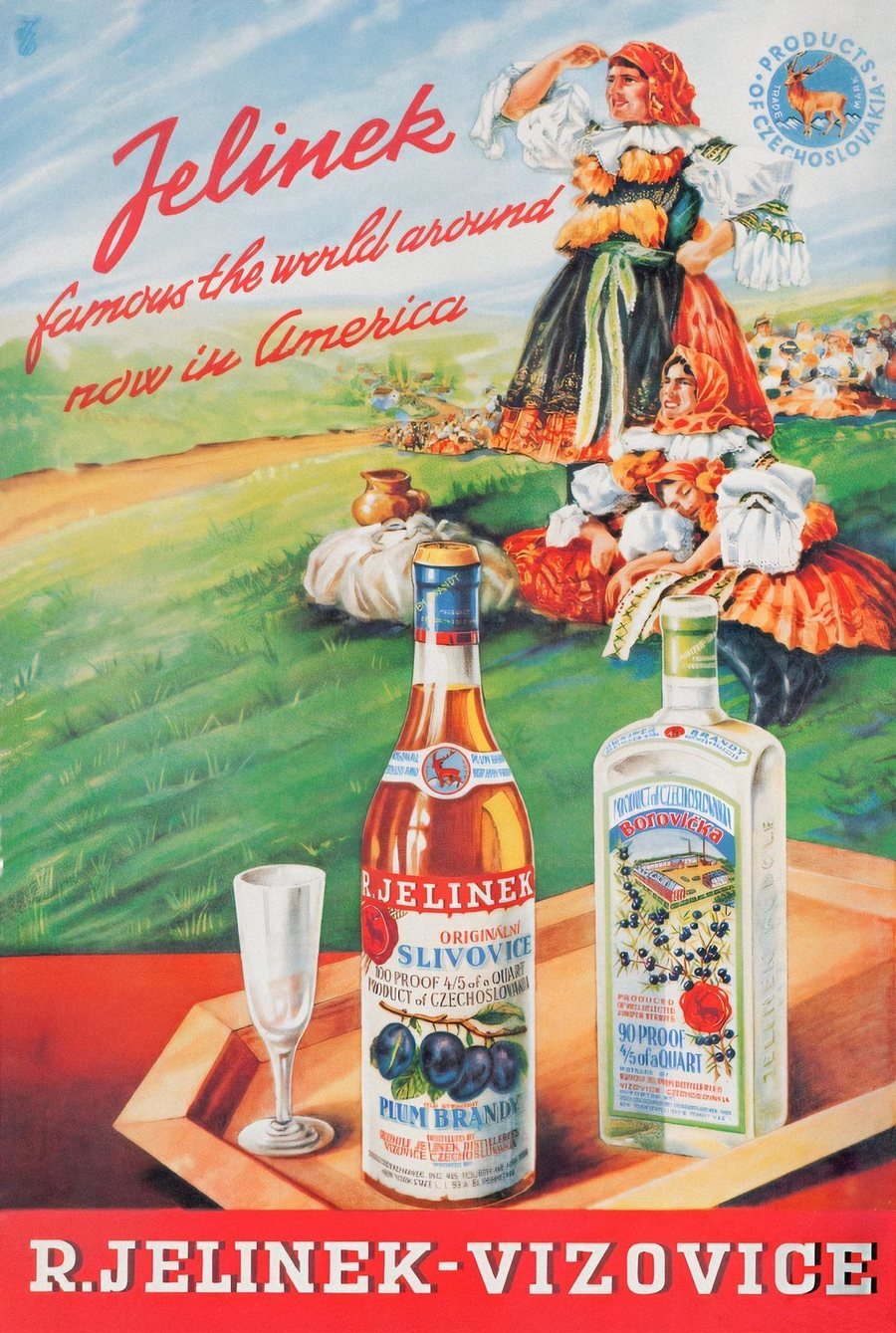
After the war, Rudolf Jelínek married Irena, the daughter of a brewer from a nearby town, and they had two sons, Zdeněk and Jiří. Despite being the unreliable, gambling brother, Rudolf had the business idea that led to huge expansion: kosher slivovitz. The entire process had to be under a rabbi’s supervision, from picking the plums right through to sealing the casks. This meant it could be drunk by observant Jews, including at Passover. After the US ended Prohibition, Rudolf started selling it to Jewish communities in New York. His timing was good: American Jews were boycotting Romanian and Hungarian goods because of rising antisemitism there; Jelínek filled the gap and increased exports to the US.
Meantime the Luxardo brothers took over the family cherry distillery together, despite having fought on opposite sides of the war. Nicolò went into politics, joining Mussolini’s Fascist Party. Giorgio, by contrast, kept out of politics. For Italian families like the Luxardos, Zara was part of Italy at last. For the city’s Croats, Italian rule was hard: Croatian schools and societies were banned, and surnames were Italianised by decree.
Let’s take stock. Neither family had moved, but both now lived in a different country (see the map below). Vizovice was in the new Czechoslovakia, by the 1930s one of the few democracies left in central Europe. Zara was in Mussolini’s Italy, but only as a tiny Italian enclave on the coast of the new Yugoslavia.
By the late 1930s, both businesses were a roaring success. Jelínek slivovitz was being shipped across the Atlantic, 35,000 bottles a year, and Luxardo had around 200 workers in Zara. Unfortunately, everything was about to change for both families.
A watch in prison
If you remember your history you’ll know the infamous Munich Agreement of 1938. Hoping to avoid a war, the British prime minister Neville Chamberlain and his French counterpart agreed with Hitler and Mussolini that Germany could have the Sudetenland, the German-speaking edges of Czechoslovakia. Nobody asked the Czechoslovaks. As the country slid away from democracy, with antisemitism on the rise, American Jews turned away from Czechoslovak goods, just as they had from Romanian and Hungarian ones.
In March 1939, the last 225 cases of Rudolf’s slivovitz set off for America. Days later Slovakia broke away, and Germany marched into what was left, Bohemia and Moravia. Vizovice and the Valley of Plums were now under Nazi occupation. Rudolf and Irena’s sons were 11 and 17. It was a perilous time for Jews, and that April Rudolf managed to get out to the US, where he’d been selling his kosher slivovitz in New York. He went alone, and tried to arrange for Irena and the boys to follow him, but they never got permission to leave. He was still there when Germany invaded Poland and Britain and France declared war. In October, he went back home to them. The Germans were in control. In 1940 the distillery was confiscated and handed to Ernst Gabriel, a Nazi official, who had a giant slogan painted on the warehouse wall: “V – Germany is victorious on all fronts for Europe”. Gabriel renamed the slivovitz after himself. It didn’t work, as customers didn’t recognise it, and tail between his legs he had to put “from the former Rudolf Jelínek company” on the labels. Rudolf’s name was back on the bottle, though he no longer owned it.
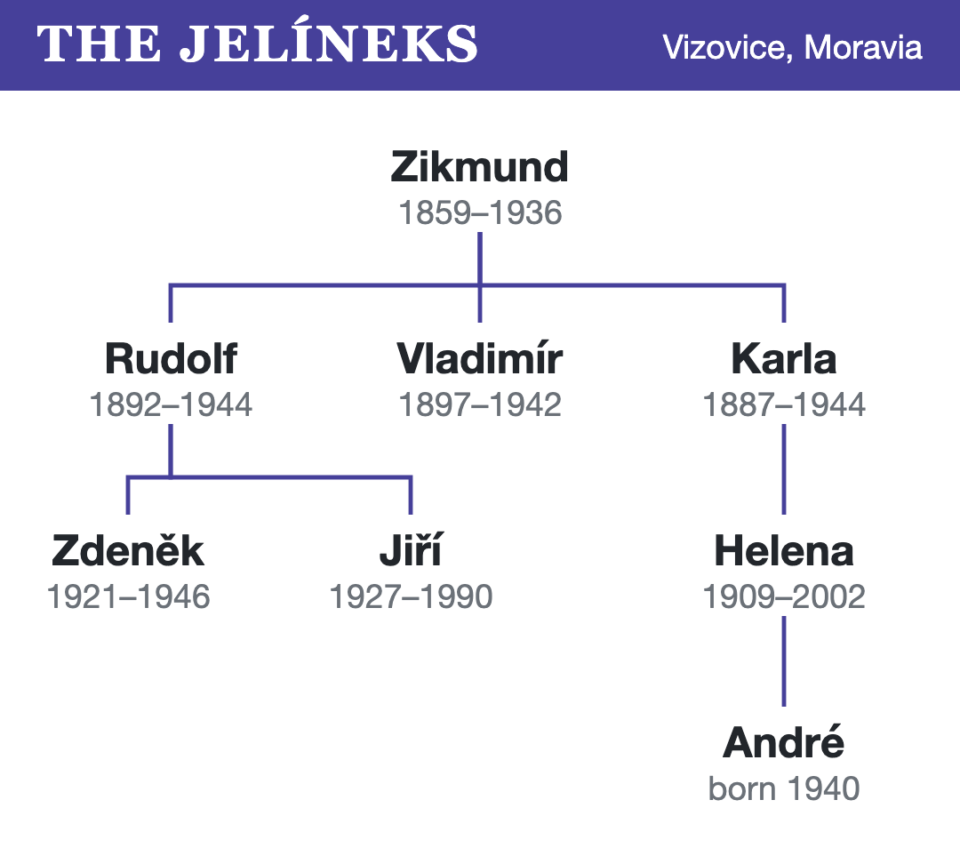
Neither of the two Jelínek brothers would survive the occupation. In 1940 Rudolf’s younger brother Vladimír, who had kept the old firm, was visiting the local priest. They sent out for some beer, not realising the innkeeper was a collaborator, who promptly called the Gestapo. Vladimír was arrested and later died in Flossenbürg concentration camp. His wife Ida and their children Tomáš and Anna, aged 9 and 12, were killed at Auschwitz the following year. In 1943 Rudolf and Irena were deported to the Terezín ghetto, and in autumn 1944 to Auschwitz, where they were both killed. Incredibly, their sons Zdeněk and Jiří both survived. Zdeněk, the elder, had slipped away and spent three years hiding in Prague under a false name. He joined the resistance, passed on information from a factory making equipment for the German army, sabotaged railway petrol tankers, and fought in a local uprising against the Germans. Jiří, the younger, was sent to Auschwitz days before his parents, aged 16, and unlike them he survived, pretending to be a 20-year-old labourer, rather than a child who might have been sent straight to the gas chambers. When the war ended they both finally went home to the plum orchards of Vizovice.
Zdeněk and Jiří weren’t the only members of the Jelínek family to survive the war. Rudolf’s sister Karla and her husband were deported and killed in 1944. But Karla’s daughter, Helena, had managed to move to Paris, marry and have a baby son, André Lenard. It’s worth knowing about André as he is still alive, and some of this story is pieced together from interviews he’s given on Czech radio. Helena and her son André had some lucky escapes during the war. One day she was summoned by the Gestapo, who had seen her maiden name Lustig on her papers and suspected she was Jewish. She caught the name of the German officer questioning her, Vogel. In a brazen bluff, she told him that in Prague, Vogel was a Jewish name. If he wasn’t Jewish, neither was she. Convinced, they let her go.
What of the Luxardos? Let’s get back to Nicolò, Pietro and Giorgio.
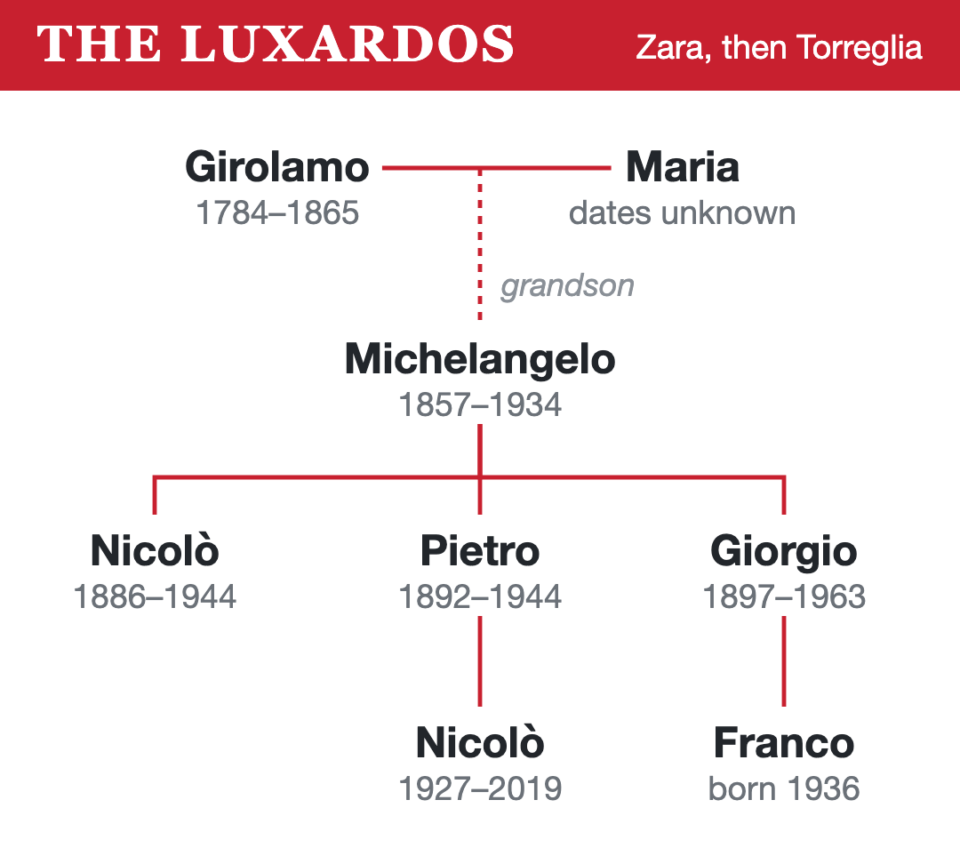
During the war Zara went from Italian to German to Yugoslav hands. Italy had joined the war on Germany’s side in 1940, and the next year their two armies invaded Yugoslavia. Italy took over much of the Dalmatian coast around Zara. In the hills, the Yugoslav partisans, a communist resistance army led by Josip Broz Tito, fought back against the occupiers. In 1943 Italy surrendered to the Allies, but German troops took over Zara, so it stayed an enemy port. For almost a year the Allies bombed the Luxardos’ hometown mercilessly, destroying most of the city. Why such a small city was hit so hard is still argued over. The factory burned for four days, and more than a million maraschino bottles went up in flames. It’s said that afterwards the middle Luxardo brother Pietro rode round the ruins on an old bicycle to pay the last wages to his Italian and Slav workers. “I won’t tell you about the looting and the thieving!” he wrote. “Never mind. Zara is now truly destroyed.” The youngest brother Giorgio managed to send his young son Franco away to safety in Italy. We’ll come back to Franco Luxardo later, as like André Lenard he’s still alive.
The eldest brother Nicolò and his wife Bianca had taken shelter on a nearby island. Nicolò had sat in Mussolini’s appointed parliament. As an avowed fascist and supporter of Italian rule over Dalmatia, he was very much an enemy, and in September 1944 partisans took him and Bianca away. When the partisans then reached Zara at the end of October, as the Germans pulled out, Pietro, the engineer who had run distillery production, was one of the local delegation that negotiated the handover of the city, and he handed over the keys of the Bank of Italy. His cooperation with the partisans didn’t help, and he was arrested soon after. In prison, fearing the worst, he gave his watch to the man on the next mattress, pleading with him to get it to his 17-year-old son, called Nicolò like his uncle.
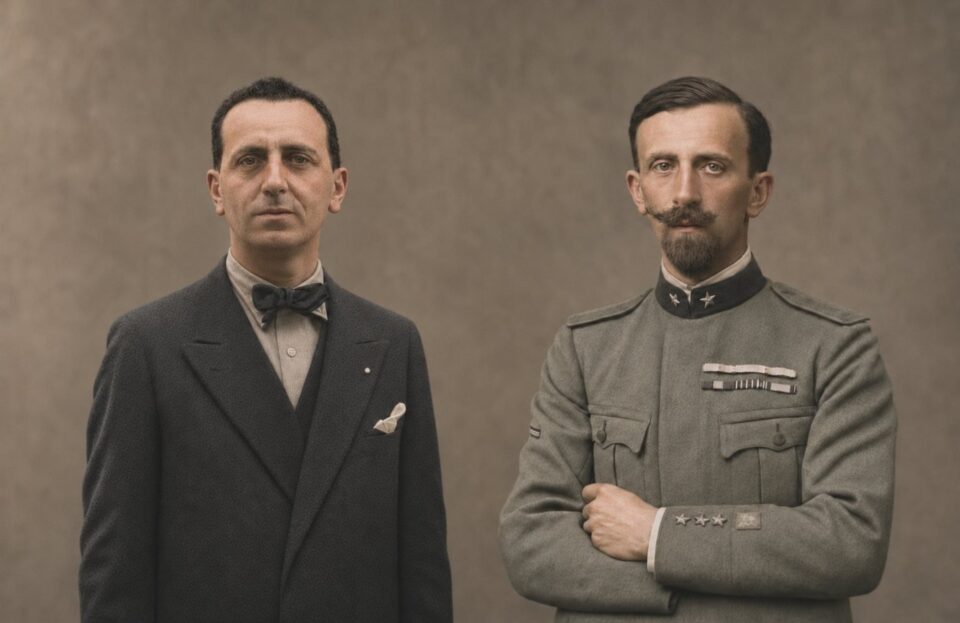
Pietro’s fears were well founded. He and his brother Nicolò (uncle to the younger Nicolò) were both shot in December 1944, without trial. Bianca’s fate is still unknown. Bizarrely a Yugoslav court sentenced the brothers to death after they were already dead—it turned out this allowed the new Yugoslav state to confiscate the business.
The youngest brother, Giorgio, is said to have escaped Zara by rowing boat at night, making it to Italy. The Yugoslav courts sentenced him in his absence to 10 years’ forced labour. Meantime, a master distiller from the Luxardo organisation had saved the crucial recipe book, with Maria’s original maraschino formula. The Luxardos still had a chance. But neither family’s story was over yet.
Saplings from Zara
After the war, the Jelínek distillery was given back to Zdeněk and Jiří. But Soviet Red Army soldiers had got there first, and in a month they carried off more than 600,000 litres of spirits. Zdeněk started it up again anyway. However, sadly, he’d developed tuberculosis during his time in the resistance and in hiding, and in 1946 he died, aged only 24. That left Jiří, 18, little more than a year out of Auschwitz and with no experience, in charge.
By then Jiří had company. In October 1945 his cousin Helena, who had bluffed her way past the Gestapo, joined them with her young son André. Governments had started running repatriation trains to bring home people who’d been stranded all over Europe, and Helena and André came on one of the first, five days from Paris to Prague and then on to Vizovice, in a carriage with broken windows and a stove in the middle. Jiří, Helena and André all lived together on the first floor of the old Razov building, in the middle of the distillery. André arrived not speaking a word of Czech, although within a year at the local school he was fluent. He later remembered Jiří as “a short, stocky hothead” with much of his father’s character. “Imagine a boy who’d been through a concentration camp suddenly becoming the owner of a factory,” André said. “He fooled around a bit. He was enjoying life to the full, and trying to run the firm at the same time.” When André was late for school, Jiří took him on his motorbike. Jiří got the business going and exporting to the US again. But unbelievably, just as things were improving, there was another cruel twist of fate, as the communists took power in Czechoslovakia in 1948. The distillery was taken from the family for the second time in eight years. First the Nazis and now the Czechoslovak communist state.
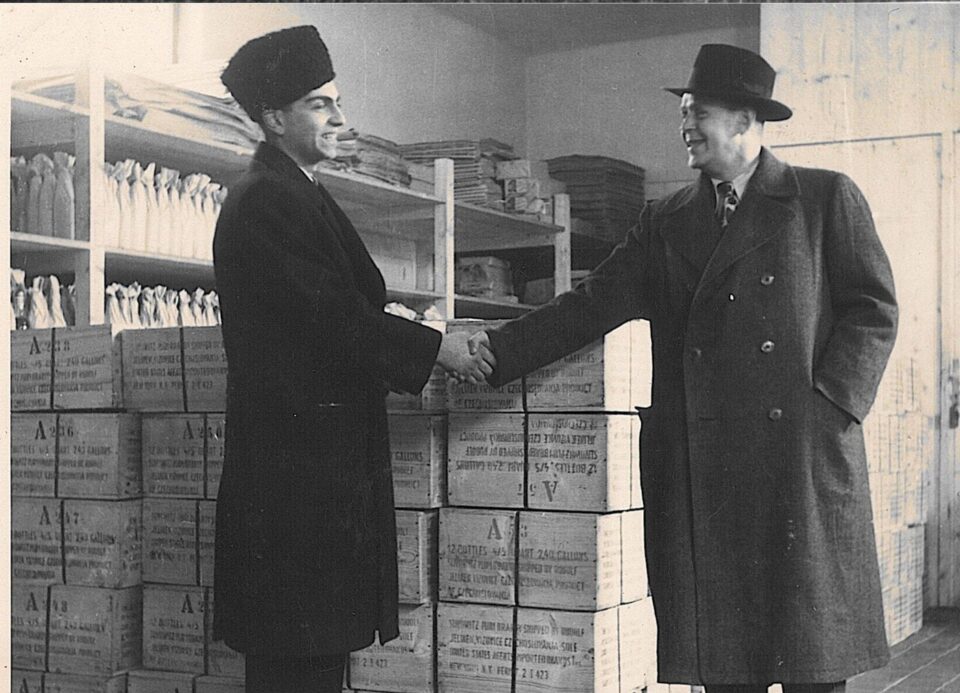
André and his mother were thrown out with a few suitcases, and they ended up moving to Bratislava. Without his distilling livelihood, Jiří emigrated to Israel in 1949 with his new wife and their one-year-old daughter, having first agreed to let the state register the Rudolf Jelínek trademark. He later moved to Canada, and then to North Carolina, and never again returned to his homeland. All this time, under both the Nazis and the communists, the plum brandy was still being sold as Rudolf Jelínek slivovitz, with no connection to the original Jewish Jelínek family. André compares it to Renault, a company France nationalised after the war for collaborating with the Germans, but which kept its name because of the value of the brand. The Jelínek name, he says, was “used, or abused, however you want to put it”.
Meantime Zara had become Zadar, no longer Italian but now part of Croatia within Yugoslavia. Most of its Italians left for Italy, part of an exodus from the whole of Istria and Dalmatia. A similar fate befell the Luxardos as had the Jelíneks. The new Yugoslav state nationalised the old Luxardo distillery, and merged it with the city’s other maraschino makers into one state firm. As in Czechoslovakia, the state kept the family name, and went on selling maraschino as Luxardo. Giorgio, the one surviving brother, moved to Torreglia, a village in the hills just outside Padua in Italy (where coincidentally the Barbieris were by now selling Aperol, having had a much less traumatic war). It was away from the cities, with spa water and the right soil. His new distillery opened in 1947. “In Zara we closed with about 200 employees; Torreglia reopened with 6,” Giorgio’s son Franco said later. So for a couple of years there were two Luxardos, the family firm in Italy and the Yugoslav state firm in Zadar. The family says its lawsuits forced the state firm to change its name, and in 1949 it became Maraska, a name it still uses to this day.
Giorgio had Maria’s recipe, saved by the master distiller. There was just one problem. The recipe needed marasca cherries. Fine if you’ve access to the orchards in Dalmatia, but no good in Italy. Sweet cherries wouldn’t do. An Italian academic came to their rescue. Years before, a professor at the University of Florence, Alessandro Morettini, had taken marasca saplings from Zara for the university’s nursery. Giorgio and Morettini spent several years selecting a variety that suited the distillery, smaller and juicier, which the firm still grows as Marasca Luxardo. It took five years for the trees to fruit and four more for the maraschino to mature, so until then he made triple sec and gin to keep going. But keep going he did.
Remember when Pietro was in prison, and asked his cellmate to take his watch and find a way to get it to his son? That son, Nicolò, was now 20. He joined his uncle Giorgio in Torreglia and helped rebuild the business. Years later the man from the prison incredibly tracked Nicolò down and handed him the watch, fulfilling his promise to his former cellmate.
By 1949 both families had lost their original distilleries, to the Czechoslovak and Yugoslav states. Jiří, who had gone home after the war, had lost the business and left for Israel. Giorgio, who had fled, had a distillery of his own again, in a new country, and Maria’s recipe, though it would be years before he and his nephew could make maraschino with it.
Grandma’s brandy
In 1989 the Velvet Revolution, peaceful protests led by students and the playwright Václav Havel, brought down Czechoslovakia’s communist government. Jiří, the son who had survived Auschwitz, now 62, hadn’t forgotten about the family distillery. Within six months his lawyer had written to the state company, telling it to stop using his father’s name and trademarks at once. But Jiří died a few months later, and his lawyer soon after. The company was privatised in 1994, in a scheme that let citizens buy shares in state companies with vouchers, and it’s now controlled by Moravia Holding, a Czech investment group. Today it’s the world’s biggest slivovitz maker, and it still makes Rudolf’s original kosher slivovitz. Jiří’s widow Jarmila later contested the control of the Jelínek name. The case dragged on for years but she eventually lost.
Zadar still has its maraschino distillery, Maraska, but like the one in Vizovice it has nothing to do with the family any more. Only Giorgio’s fresh start in the hills outside Padua stayed in the family. When Giorgio died, Pietro’s son Nicolò, the boy who was given the watch, took over and ran it for the next 37 years, and today its president is his son. Luxardo maraschino is now a staple of cocktail bars around the world, and the seventh generation has joined the business, including Gaia Luxardo, the first woman of the family to work there since Maria worked out her recipe at home two centuries ago.
Remember the young boy André, Rudolf’s great-nephew? At 17 he went back to France, and eventually became a banker. And Franco Luxardo, Giorgio’s son, who was sent away to Italy as a boy during the bombing, is also still with us as far as I know. André, now 86, and Franco, now 90, have come to terms with their family histories in different ways.
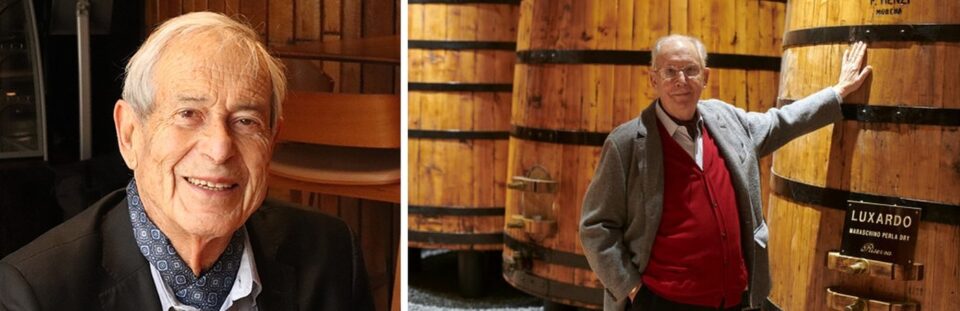
Franco had grown up to fence sabre for the Italian team, and started the Trofeo Luxardo, still a sabre World Cup event. When he first went back to Zadar, the phone started ringing almost immediately, as word had got round that “a Luxardo” was in town. He was invited into the old factory, where the manager’s office turned out to have been his bedroom as a boy. About 100 workers stopped work, and the older ones hugged him. In 2023, a councillor proposed giving Franco a lifetime award, saying the family “did more for this city than anyone”. But there are long memories in the Balkans. Zadar city council voted it down 17 to 4, as the family had been “extremely Italian-oriented”; one councillor called the idea “pure fascism”. Franco said he respected “the decision of a democratic body”. He still enjoys a maraschino (his favourite cocktail is the historic Martinez, the ancestor of the martini from the 1880s).
André never tried to claim the Jelínek distillery back, and says the new owners have done “an excellent job”. He’s even glad he didn’t take it on, as he couldn’t have run it as well, although he does sit on its supervisory board. Asked whether, as a banker, he would lend his gambling great-uncle Rudolf money today, he said he would, “with pleasure”. He remembered the distillery as “huge barrels, at least they seemed huge to a small boy. And those barrels in the yard smelled of mash, apricots and plums.” Meantime his French friends ask him to bring out “grandma’s brandy” (his grandmother Karla was Rudolf’s sister) after dinner. He now has Czech citizenship, and he wants to be buried in Vizovice, with the Jelínek family and his mother.
Writing this article
Both families’ stories have been told before, but mostly in Czech, Italian and Croatian, and as far as I know never side by side. Of the 27 sources I’ve linked to on the two families, only seven are in English.
The writing is mine and mistakes are my own. I used AI extensively for research, translation, fact-checking and suggestions (Claude Opus 5.5), and Claude also wrote the code that draws the map and the family trees. The featured image and the colourised photos were made with ChatGPT. Google Gemini Notebook’s podcast feature, created in part by non-fiction author Steven Johnson, helped with ideas on narrative and structure. The audio version is read by an AI voice from ElevenLabs, which also made the theme music. I’m in no way a historian, so this is very much an amateur project, one that I’ve enjoyed working on but that wouldn’t have been possible for me without modern day AI.
In researching and writing the story, I came across a few points that are unclear or contested, so will list those here.
It seems that how Nicolò and Pietro died has been told differently over the years. For decades the story was that Nicolò and his wife Bianca were drowned in the sea off Zara, and that Pietro was deported and never heard from again. That’s what the Italian national biographical dictionary, the Dizionario Biografico (2006), says, and Luxardo’s own website still tells the drowning version. Then a Croatian historian gave Franco Luxardo and his cousin a document showing that both brothers had been shot by the Yugoslav political police in December 1944. That’s the version I’ve used.
The bombing of Zara is still disputed, down to the basic numbers. Depending on who’s counting, and what counts as a raid, the city was bombed anywhere from 26 to 54 times, and estimates of the dead range from about 1,000 to as many as 4,000 (Italian Wikipedia sets out the different counts). Nor is it clear why such a small city was hit so hard. Some writers point to an undated Allied radio message saying Tito had asked for Zara to be bombed, to hit troops passing through. The Italian historian Raoul Pupo accepts that the Yugoslavs asked, but doubts it made much difference, and thinks the likelier reason was an Allied plan to make the Germans expect a landing in Dalmatia.
Both the Luxardo and Maraska companies are claiming their version of their history back to 1821. In 2021 Luxardo celebrated its 200th anniversary in Torreglia, and Maraska celebrated its own in Zadar. The two firms did end up in court, though the cases I can find came well after the 1949 renaming: according to the Dizionario Biografico, a long case that started in Genoa in the 1960s ended years later in a court in Munich, which found against Maraska for copying Luxardo’s trademarks. Maraska is now owned by Stanić Beverages, part of a group from Bosnia and Herzegovina, and among its other spirits it makes a šljivovica, a plum brandy. And in a sign of the times, the main building of the old Luxardo distillery on the Zadar waterfront, one of the few Luxardo properties to survive the intense Allied bombing during the Second World War, reopened in 2025 as a hotel, the Hyatt Regency Zadar Maraska.